Bittersweet Symphony
What’s it all mean? That’s the existential question that multi-instrumentalist Christian Gates—better known by his stage name, The Philharmonik—posed after navigating a series of personal struggles. The search for answers ultimately led the “one-man orchestra” to enter—and win—NPR’s career-catapulting Tiny Desk Contest in 2024. Now, as the Sacramento singer-songwriter explores his spiritual side in his new album, Transcendentalism, he continues his quest for deeper meaning.

Christian Gates stands in front of a mural by Sacramento artist Jose Di Gregorio at the Warehouse Artist Lofts on Sept. 16, 2025. (Portrait by Max Whittaker)
Christian Gates, aka The Philharmonik, lopes onto the stage at the Blue Note Los Angeles one evening in August, wearing a rumpled button-down with a necktie as a Jimi Hendrix-style headband over his thick halo of curls. He resembles an office worker moonlighting as a rock star, which subtly evokes the “desk” job that got him here. He and his band made it back to L.A. from a festival gig in Toronto the previous night by the skin of their teeth, thanks to an Air Canada strike that morning, which forced them to drive to Detroit to catch a Frontier Airlines flight. “Lots of Canada. No air,” he jokes into the mic as he mimes staggering with exhaustion.
But whatever combination of planes and automobiles he had to employ to get here, Gates wasn’t going to miss this gig: The Philharmonik is only the third act to ever grace the stage at the newest outpost of the legendary New York jazz venue (other locales include Napa, Honolulu, Milan and Shanghai). Every other performer on that first week’s schedule is Grammy-nominated or Grammy-winning, so it’s quite the feat for Gates to be singled out for the club’s opening week, but he’s growing used to singular honors, ever since beating out thousands to win NPR’s 2024 Tiny Desk Contest, and taking first place among tens of thousands in American Songwriter‘s 2023 Song Contest, both for his tune “What’s It All Mean?”
It’s most likely the burgeoning cachet of the NPR competition that has nearly filled the Blue Note with a diverse audience (all ages, genders and races represented) on a Monday night. Starting in a deep instrumental funk groove, the band suavely segues into the shiny, Motown-inflected pop hits that rocked the Tiny Desk so hard, then runs through high-energy Hendrix-like skirmishes before launching into some yet-to-be-released material that feels like a triumphant culmination. To think that just two years ago, when Gates’ self-produced album Kironic dropped, despite the rave reviews for exam-ple, the online pop culture magazine Ringleader called it “as thought-provoking and experimental as it is downright danceable and sexy”—he was crestfallen that he “couldn’t even sell out Harlow’s.”
“What’s It All Mean?” is an earworm with a message. The song is a philosophical take on the existential crisis of holding onto your dreams while holding down a day job (Gates was working for U-Haul at the time). “If you fall seven times, make sure you get back up eight,” he sings encouragingly. The companion video has an uplifting and wry quality part anthem, part comedy. According to one YouTube comment, “It’s as if Bill Withers watched Guardians of the Galaxy and Anchorman back-to-back and then laid this down.”

The Philharmonik performs a Tiny Desk concert at NPR’s headquarters in Washington, D.C., in May 2024 after winning that year’s Tiny Desk Contest. Pictured with Gates are band members, from left to right: keyboardist Jeffery Archie, flutist Jimmy Toor, guitarist Darius Upshaw, background vocalists Alicia Huff and Moriah Wenzel, and guitarist Connor Chavez. (Photo by Michael Zamora/NPR)
The day after the Blue Note show, the 32-year-old Sacramento musician holds court at his home recording studio in a rented guest house in Encino that he moved into temporarily at the beginning of the year to work on his new album titled Transcendentalism, scheduled to be released in early 2026. “I just had my last mixing session for it yesterday,” he says, bringing a second chair in from the kitchen—there was only one, because Gates played guitar, bass and keyboard on his recordings himself and produced myriad other instrumental effects digitally, evoking shades of Prince, who played all the instruments on his debut album, For You, in 1978. “I consider myself like a one-man orchestra,” Gates says, explaining his Philharmonik stage name. The relocation to L.A. put him in orbit of professional services he could finally afford—this album marks the first time he worked with mixing and mastering engineers, a process he calls both scary and revelatory, though he still prefers to produce and release his work independently.
The album’s title is a reference to his spiritual peregrinations. Gates is, by nature, a seeker. Raised Catholic, he sampled several Christian churches, then entered a period of staunch, disillusioned atheism, only to return to a more expansive sense of spirituality in recent years. “God’s much bigger than I imagined him to be,” he says.
When the musician hits play on track after track, each new one conjures that sense of instant recognition that comes from hearing a crazy catchy tune—you think, “Oh that song, I love that song!” even though you’re just now hearing it for the first time. The influences range from Hendrix to Prince to Stevie Wonder to Pink Floyd, but they’re fully digested, and the sound is his own. His vocal range is impressive, including a confident falsetto and a judiciously doled-out belt that would get him a four-chair turn on The Voice, but he keeps it elegantly simple most of the time, letting the lyrics shine. “I guess that’s my biggest upset,” he sings, “thinking I can drive my way to heaven with a Corvette. Instead, I wake up in a cold sweat, wondering how I haven’t given up yet.” Five songs into the private listening session, it’s clear we are not dealing with a one-hit wonder.
Indeed, he has started to get recognized in public, once by a Tiny Desk fan at the Madrid airport. “It’s pretty cool,” he says with a sheepish grin. “But it’s not to the level where I can’t go out of my house and develop a vitamin D deficiency.”
Christian Gates was born in Cleveland, Ohio, in July 1993. When he was 5, his mother, Tamara Bahlhorn, took him to a classical music concert, and was astonished when he came home and immediately started playing the melodies he’d heard at the concert on the family piano, with astonishing accuracy. Within a year, she enrolled him in music lessons. In 2000, the single mother and son moved to Sacramento. A stepdad and little sister soon followed.
He was raised in Rosemont and spent his 20s living in Oak Park while studying music theory at Sacramento City College and hitting the links at golf courses like Ancil Hoffman (he briefly considered trying to turn pro). He easily found work producing other musicians and scraped together a living in the music industry.
Growing up, Gates’ mom objected to the themes and language of hip hop, and forbade her young son to listen—which only encouraged him to surreptitiously record Kanye West, Juvenile and T.I. from the radio onto his MP3 player. Fast-forward to 2016, when Gates released Good People, a hip-hop-inflected EP. For the next few years, he was on a gentle roll, building an audience with his energetic live shows at gigs ranging from living rooms to intimate venues like the Torch Club, to festivals in Cesar Chavez Square, to larger venues like Harlow’s and the Guild Theater in Oak Park, and collaborating with hometown phenom Frank Lopes, aka Hobo Johnson, who appeared on The Philharmonik’s 2017 single “Momma’s House.” Lopes’ 2018 Tiny Desk entry, “Peach Scone,” didn’t win, but it did go viral on YouTube, and that success catapulted him to fame. In 2019, Gates joined Lopes on tour as an opening act and released his song “Drugs,” which quickly gained traction. Everything seemed to be looking up, up and away.

The Philharmonik headlines a midtown block party celebrating the 10th anniversary of Motown on Mondays on July 1, 2024. (Photo by Chase Bahlhorn, courtesy of The Philharmonik)
Then the pandemic hit, and Gates’ trajectory turned to down, down and out. In 2020, he used his government stimulus checks to buy equipment for his recording studio and set out to record a new album. But a growing addiction to Adderall derailed him. He’d been diagnosed with ADHD at 11, but eschewed drugs until turning to them to help focus shortly before the start of the pandemic.
“I was just going down a rabbit hole taking like four times the pharmaceutical dose,” he recalls. “It starts out real nice, right? And then you need more and more, and before you know it, you’re stuck in the middle of the woods with your compass broken. It’s midnight and all you can see is a star, but you can’t see the North Star.”
By early 2023, he had overcome his addiction and also gotten out of a long, unhealthy romantic relationship, but the emotional toll of both situations left him feeling he’d lost his creative mojo. He was single and sober, but thought he couldn’t make music without the edge. “That was the biggest lie I ever told myself,” he says.
It would take going even deeper down the rabbit hole for him to break through the other side. On May 8, 2023, he was driving for Uber in a new-to-him 2021 Nissan Versa. He was getting his life together. Then a reckless driver ran a stop sign and T-boned him at an intersection in Natomas, totaling his ride and his income source. Insurance paid out less than he still owed on the car, so he still had payments and couldn’t afford to replace it. By that fall, his credit cards were maxed out, and he had taken that desk job at U-Haul.
“It’s like there’s a divinity in the trials and tribulations I’m going through, because they keep happening consistently,” he says. “It’s a specific season that is preparing you for what you’re supposed to go through next. But at the time, I was exhausted, fed up with everything.”
Still, he decided to give it one last Hail Mary shot. He created a vision board for the Tiny Desk Contest that included a picture of Usher performing a Tiny Desk concert in 2022. “I started calling for favors. I said, ‘I have no money, but I really need help,’ ” he remembers. “That’s when the Sacramento community stepped in.”
Fellow local musician Devon Blue Whitaker offered to direct the video for Gates’ submission. He recalls watching a dozen other entries with Gates, and they were both staggered by the talent on display. Any other artist would have been daunted, Whitaker says, “But Christian said, ‘We’re going to win this—you, me and Sacramento.’ That level of positivity is infectious. It’s never an ‘I’ thing with Christian, it’s always ‘We.’ ”
Kimiyo and Nino Roy Machado were music fans who also heeded the call when it went out on social media, volunteering their All City Homes offices—the Oak Park agency specializes in helping BIPOC buyers become homeowners—for the shoot. (Tiny Desk submission rules require the entry be shot at a desk.) “I’ve been following Christian’s trajectory and have been a fan not only of his music, but of him as a local artist really caring about representing Sacramento,” Nino Roy says.

Gates with four members of his touring band—from left to right, bassist Samuel Phelps, drummer Courtney Miller and guitarist Darius Upshaw—inside Capital Public Radio’s offices in August 2024. (Photo by Lauren “Elle Jaye” Jenkins, courtesy of The Philharmonik)
NPR’s Tiny Desk Concert series started in 2008 featuring emerging artists, but has since become a must-stop for headliners like Dua Lipa, Justin Timberlake, Billie Eilish and Taylor Swift, delivering stripped-down performances inside NPR’s actual open-plan offices in Washington, D.C. The first Tiny Desk challenge was held in 2015, and the winner, Fantastic Negrito, went on to release The Last Days of Oakland in 2016, which won a Grammy for best contemporary blues album.
“It is the tiniest desk, with the biggest platform,” Gates says.
About a month after the competition’s submissions closed in February 2024, Gates learned he’d just won the overall grand prize in the American Songwriter Song Contest, beating out tens of thousands of entries and winning the $10,000 award money, which he received right away.
Then within a few weeks of the windfall, someone at NPR called and told Gates they were filming a video promo for Tiny Desk and would like him to participate via Zoom. It was a clever ruse for getting his reaction on camera when they told him he had beat out nearly 7,000 other entrants to win the legendary contest. That call happened to come a year to the day after the car accident that “ruined” his life—and inadvertently put him on the path that led here.
Tiny Desk host and contest judge Bobby Carter is excited to have played a part in getting Gates the national exposure he deserves—and is ready for. “He’s so versatile, there’s nothing he can’t do. It’s hard to be able to produce good music, play the instruments, sing and rap. He’s the total package,” Carter says. “And the cherry on top of the icing on the cake is the fact that he has vision. His music is very fresh, and I can’t wait to see where he goes.”
The Philharmonik’s eight-member touring band (Gates is on keyboards during live shows) flew to Washington, D.C., to film the Tiny Desk concert, a triumphant 20-minute set that has nearly two million views on YouTube and counting. From there, the group embarked on a 10-city whirlwind tour, where, Carter says, “He just ripped it down every single night.” And after that Asia and Europe.
Now Gates wants to pay it forward, and has his eye on his own potential opening acts, like Sacramento rapper Jakhari Smith, whose 2022 Tiny Desk submission, “Far Away,” was touted by Capital Public Radio’s Terra Lopez as a NorCal favorite. (Gates’ booking agent is currently working on putting together a 2026 tour for Transcendentalism, including Sacramento dates.)
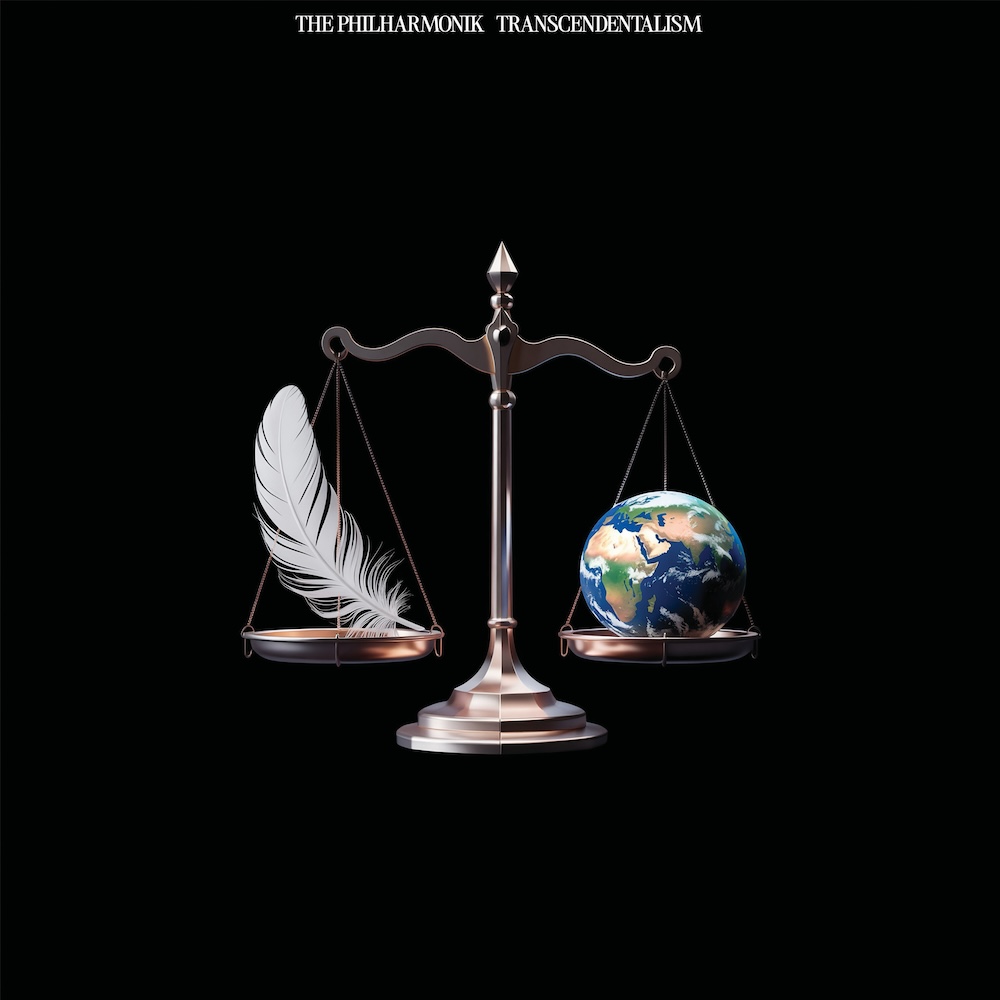
The Philharmonik’s new album, Transcendentalism, is set to be released in early 2026. Arts magazine Ringleader marveled at the “impossible instrumentalism for one artist” on the advance single “Power.” (Courtesy of The Philharmonik)
“Christian is one of my biggest inspirations,” Smith says, taking a break from his own day job as a cashier at the Sacramento Natural Foods Co-op. “He’s not afraid to try anything, and his music challenges you to be different.”
When the Encino lease is up in January, Gates plans to move back home to Sacramento—he wants to tap back into that strong community base, even as his path leads to a world-touring music career. “Coming out to L.A. was an experience,” he says, “But I can build everything in Sacramento. I’m going to reconnect with the community. I feel like I have the mindset now to actually be effective with working with people and making the community a better place.”
But even though he spent his young adulthood in Oak Park, he’s thinking about the burbs now. “People are going to hate me, but I like Granite Bay and Roseville,” he says with a quiet smile, then arches an eyebrow. “Does it sound classist?” He craves a quiet, suburban life with golf clubs in the garage and dogs in the yard—just without the office job, because The Philharmonik has no plans to stop wearing his necktie around his forehead. And if he’s ever asked to give a TED Talk, the topic won’t be music. Instead, he says with a grin, “It’ll be a master class on how to find yourself.”