Q&A with Actress-Director Danielle Moné Truitt
Many celebrities grow up in a place, move to Hollywood, make it big, and never look back. Danielle Moné Truitt is not that kind of celebrity. Her résumé ranges from serving as the visual inspiration for Princess Tiana in Disney’s The Princess and the Frog to starring as Sergeant Ayanna Bell alongside Christopher Meloni in Law & Order: Organized Crime. But Truitt has always kept one foot firmly planted in the River City thanks to her family and also her work, like 3: Black Girl Blues—the one-woman show she performed at the B Street Theatre in 2022. And now, having moved back to Sacramento, she is standing 10 toes down on her hometown, shooting a short film she wrote about her childhood and directing Douglas Lyons’ play Don’t Touch My Hair, which runs June 12–28 at Celebration Arts.
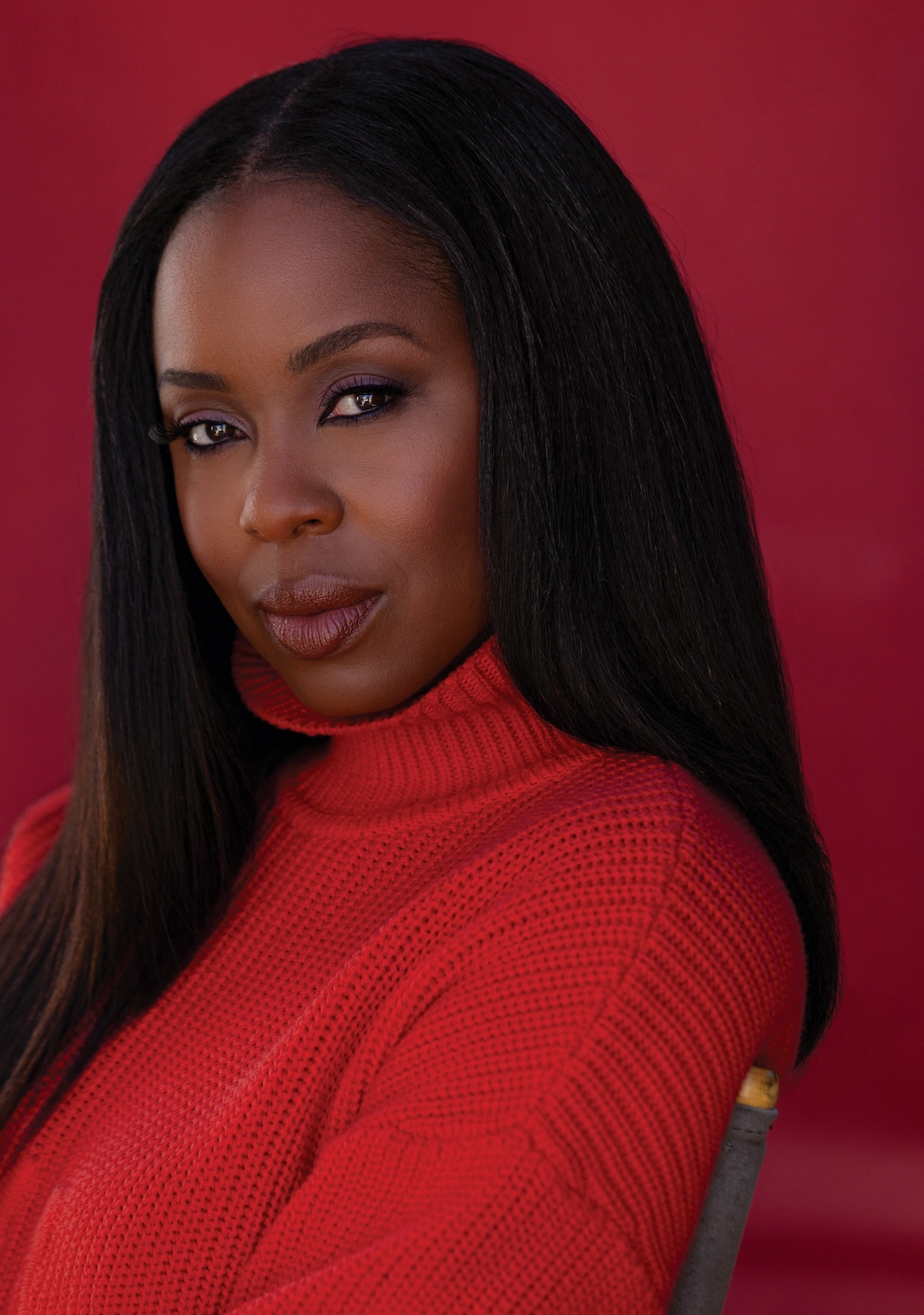
Portrait by Collin Stark, courtesy of Danielle Moné Truitt
You were born and raised in Sacramento. If someone wanted to understand the version of the city that you grew up in, where would you take them? What places do you identify as home?
I grew up in Valley Hi, which is in south Sacramento. I went to [Herman] Leimbach Elementary, then I went to [Samuel] Jackman Middle School, and then I went to Valley High School. I had the best high school experience ever, so Valley High would definitely be a place that I would take people. I know it’s not like this for a lot of people, but I had so much fun in high school. I was involved in everything you could imagine. I was a cheerleader, I played basketball, I ran track, I was a rally director, I was on the moot court team.
And Cal Skate is no more—it’s now the Simmons [Community] Center and it’s like a basketball thing—but I have so many memories there. I actually wrote a short film about my childhood called Mona, which I’m planning to shoot in Sacramento in August, and one of the locations is going to be a skating rink that gives a nod to Cal Skate.
Then I would have to say church. My dad is a pastor and my mom is a minister—they still have a church here in Sacramento called Spirit and Truth Ministries, and that church is definitely a huge part of my upbringing here. Also, William Land Park. My grandparents lived in Freeport [Manor]—my nana still lives there—and we had so many family picnics and barbecues at William Land Park. And Arden Fair mall—that was the fancy mall—and Florin Mall.
Did you do theater at Valley High School?
You know it’s funny—I pretty much did everything but theater. My junior year I took a theater class and auditioned for Bye Bye Birdie. I got the part of Kim MacAfee, which was great, but I had a cheerleading competition and they said I couldn’t miss rehearsal. I was like, “I can’t miss the cheerleading competition,” so I quit the play and went to the competition instead.
But I’ve been performing my whole life. I grew up as a singer; that’s what I was known for around Sacramento—I was always in somebody’s talent show. It wasn’t until I got to college at Sac State and took a theater class that I got bit by the theater bug. The professor, Juanita Rice, pulled me aside a couple weeks into class and asked if I was a theater major. I told her no, I was a psychology major. She encouraged me to audition for a play and I ended up getting the lead. After that experience I realized theater was something I really wanted to explore. I kept taking the theater classes and I changed my major. [Truitt graduated in 2004 with a degree in theater arts.]
What was your experience in the Sacramento theater scene at the time?
Well, I was the only Black woman—only Black student—in the theater department at Sac State, so I didn’t get a lot of opportunities to perform in the regular plays. They had a Black theater group on campus, but they would bring in actors from outside of the school, and they only did one Black play a semester. If I can only perform in one play a year, that’s not a lot of opportunity to really learn the skills you need.
Luckily, Dr. Linda Goodrich [a longtime theater and dance professor] took me under her wing and she introduced me to James Wheatley and the people at Celebration Arts [the Sacramento Black theater troupe that Wheatley founded in 1986]. It was the best thing that could have happened to me at the time because I was already 19 and I didn’t have a background in theater.
James Wheatley did a fantastic job of giving opportunities to a lot of us African American theater people who were coming up. I had taken a directing class at Sac State and really, really liked it. I just had a knack for it. We had to direct two of our classmates in a scene from any play that we wanted. I chose August Wilson’s The Piano Lesson. I told you that I was the only Black person in the department, so I cast two white people to do the scene, and it was so awesome. They were like, “Oh my God, this is so hard,” but they loved the experience, and I thought that they did a great job. I ended up getting an A.
So I told James Wheatley about that and he was like, “Well, do you want to direct Fences [by August Wilson]?” I was like, “What? Sure!” I was 20 or 21 at the time and I was super excited. I took to Fences because my dad, Arnold [Keith] Thrower, was a professional baseball player, so baseball was always a huge part of our family. [The play’s protagonist is Troy Maxson, who played baseball for the Negro League.] He played for the A’s and the Cardinals in the minor leagues. He was on the team with Jose Canseco, Mark McGwire, Dave Stewart and Rickey Henderson.
For people who haven’t seen a performance at Celebration Arts, what makes that theater company so special?
When I started at Celebration Arts, it was in the original building that had only about 50 seats. [The troupe relocated from its tiny East Sacramento quarters to the former children’s theater space of the B Street Theatre at 28th and B streets in 2017. Still intimate, the venue holds 100 seats.] I think there’s something magical about tiny theaters. I actually prefer intimate spaces to huge ones. The beautiful thing about theater is that it’s not just what’s happening on stage—it’s the dance between the audience and the performers. In a small space like that, the energy is very palpable. When you do a play and you literally have somebody a few steps away from you, you can see all of their expressions. You know what they’re thinking and feeling. It shapes your resilience as an artist. And theater that speaks to the African American experience is my favorite kind of theater because I know it, I’ve lived it. There’s a soul and a depth to it that is very special.
READ MORE: Sowing the Seeds of Change – How James Wheatley grew Celebration Arts for the next generation
You’ve also been very involved with the B Street Theatre, both when you were starting out and more recently, with shows like your one-woman play 3: Black Girl Blues.
Yes, and B Street is what really gave me my professional start. [Co-founder] Buck Busfield was the first person to give me my Actors’ Equity card. They needed a character for a play and he said, “If you’ll do it, I’ll give you your equity card.” Those years at B Street really shaped the kind of actress I am. Their theater is very naturalistic. When you watch their plays, you feel like you’re watching real humans having a conversation. That training made the transition from theater to television a lot easier for me.

Danielle Moné Truitt (pictured here with her co-star Christopher Meloni) portrayed Sergeant Ayanna Bell on Law & Order: Organized Crime. (Photo by Will Hart/NBC)
Speaking of television, your big break came when John Singleton [the Oscar-nominated writer-director of Boyz n the Hood] cast you as the lead in his BET police drama Rebel in 2016. How did that come about?
That was the most remarkable audition of my entire career. After my first scene, John Singleton said, “I like you. You Black. I love your flavor. You are a Black woman.” Then he said [to the other producers in the room], “Y’all see that? That’s what I want.” I was literally sitting there with my mouth open. He asked where I was from and what I’d done, and I told him mostly theater. I was doing a play called The Mountaintop and he said he was going to come see the play. I left that audition in tears—tears of joy.
At the time, BET wanted to hire a known person, so John did a 12-hour screen test with me to prove to them I was the right person. Later, I found out I was the only person he tested. I didn’t think I was going to get the part, but the fact that someone like John Singleton believed in me gave me hope that I could make it in this industry.
OK, I have to geek out for a minute, because I’m a huge Disney fan, and before Rebel, I heard you were actually the main visual reference for Princess Tiana from The Princess and the Frog.
Ha, yes. So, my agent originally tried to get me an audition to be the voice of Princess Tiana, but they were only seeing “name” actors. About six months later she sent me an audition for something called “video reference Princess Tiana,” and I was like, “What is that?” Basically, I lip-synced the dialogue and songs as Princess Tiana and acted out every scene while the animators filmed it. They used my facial expressions and body movements to draw her, and I did that for about nine months. They’d send me the storyboards afterward, and at one point Princess Tiana literally looked just like me. According to my family, I am Princess Tiana. I say I’m her spirit—her facial expressions, her body movements. And when she turns into a frog? That was me too.
Most people now know you as another memorable character: Sergeant Ayanna Bell on Law & Order: Organized Crime. [Truitt played the role for all five seasons of the show, which ran from 2021 to 2025.] What’s it been like to be part of such a storied franchise?
It’s been an honor. My whole life I’ve wanted my work to touch people and create more acceptance for people of color and [other] minorities. So it has meant a lot to portray a queer Black woman in that kind of leadership role. I’m not a queer woman, but I’m an ally and many people I love are part of that community. Sergeant Bell is the only Black queer character in the Law & Order universe, and I don’t take that lightly.
I’ve read that you were really intentional about how that character was written and portrayed. Why is that kind of representation so important to you?
When they first told me the character was a lesbian, my first thought was, “Must we put every type of minority in one character?” [Laughs] She’s a woman, she’s Black, and she’s queer. I had a lot of conversations with the showrunners to make sure they were thoughtful about the depth and nuance of who she is. When you’re an artist of color, there are so many different things you have to navigate.
And now you’re back in Sacramento directing Don’t Touch My Hair at Celebration Arts, where it all began. What’s the play about?
It explores Black womanhood and the idea that we’re not a monolith. The two main characters are best friends who live together but have very different personalities, and it’s hilarious. It also speaks to something a lot of Black women struggle with—always taking care of everyone else. In this play they end up being heroes for someone else, but also for themselves. That’s powerful.
It’s also just going to be fun—there’s music, there are these heightened moments, and both of the characters have these superpowers that they discover. We talk about Black girl magic, and you really get to see that magic in these women. It’s just a really good time, really funny, and I’m excited to direct it.
You’re acting, you’re writing, you’re directing. What kind of work is exciting you most at the moment?
I actually moved back here [recently, after years of living in L.A. and New York], so right now I’m most stimulated by creating my own stories. This industry changes so much, and when you rely on other people to give you opportunities, you’re putting your future in their hands. I’ve always been the kind of person who creates my own doors. I created an online course called Empowered Artist about the emotional side of working in entertainment—rejection, uncertainty, impostor syndrome. People teach you how to act or sing, but they don’t teach you how to survive the industry. I’m excited to be somebody who creates her own opportunities and creates opportunities for others. For Mona, the short film I’m about to do, I’m casting Calah Lane to play the teenage version of me—she was the lead actress [who played Noodle] in Wonka with Timothée Chalamet. So she’s going to play me and I’m going to play my mom. Hopefully we can get it to be a TV series, but it’s going to be a great opportunity for Sacramento in general. Shooting a film here is going to bring a lot of love and attention to our city. I’m really excited about that.
View this post on Instagram